

Art as an Alternative Investment: What India's ₹167 Crore Painting Tells Us
Raja Ravi Varma's record ₹167.2 crore auction sale has put Indian art on the global investment map. Should HNIs and affluent investors consider art as an asset class? A balanced guide.

When a 130-year-old oil painting sells for ₹167.2 crore at an auction in Mumbai, it does more than break a record — it forces investors to sit up and ask: Should I be looking at art as an investment?
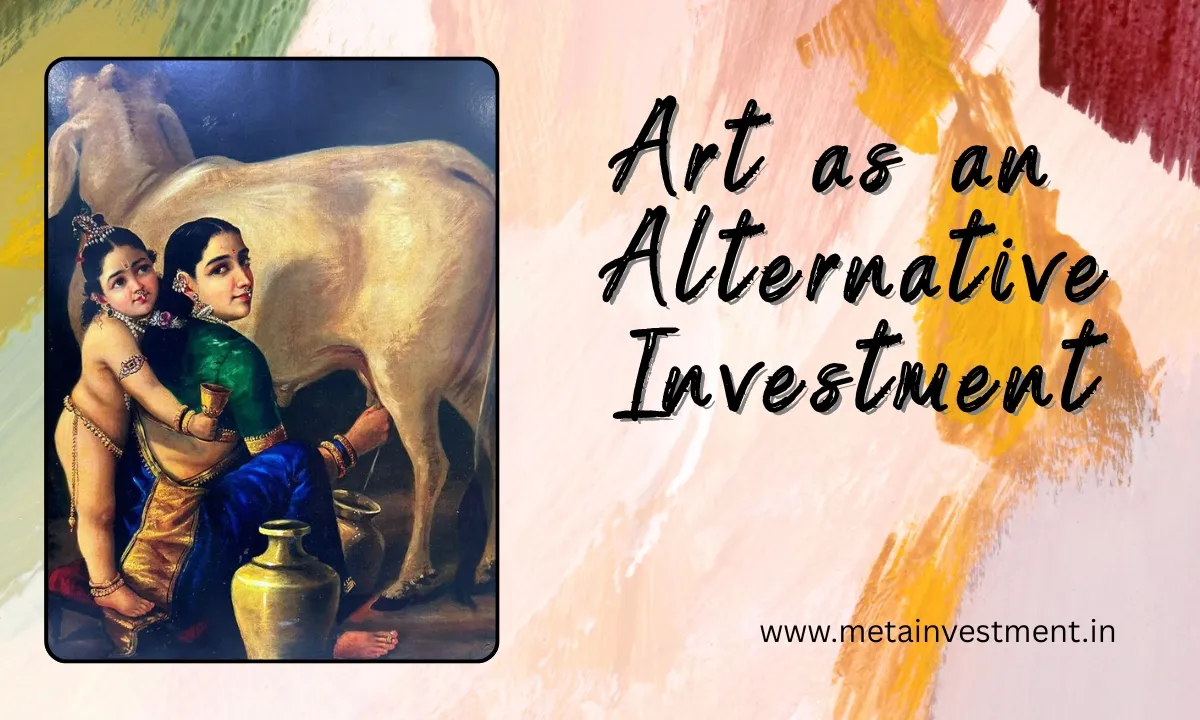
Raja Ravi Varma’s Yashoda and Krishna (1890s) fetched that jaw-dropping price at Saffronart’s Spring Auction on April 1, 2026 — making it the most expensive South Asian artwork ever sold at auction. The buyer? Cyrus S Poonawalla, the 84-year-old founder of Serum Institute of India, participating remotely from Pune.
The same auction recorded a total sale value of ₹301.45 crore with every single lot finding a buyer — what the art world calls a “white-glove sale.” For India’s growing class of high-net-worth investors, it’s a compelling data point. But data points don’t make a complete investment thesis. Let’s evaluate art as an alternative asset class with clear eyes.
What Just Happened in Indian Art? A Quick Recap
The ₹167.2 crore sale was not a standalone event. It was:
- 41.7% higher than the previous Indian auction record — MF Husain’s Untitled (Gram Yatra), which fetched ~₹118 crore at Christie’s New York in March 2025.
- Part of a broader trend of Indian and NRI collectors driving demand for museum-quality Indian art — approximately 80% or more of buyers are Indians or members of the Indian diaspora.
- A signal of tightening supply: Works by Raja Ravi Varma are largely held in institutional collections in Baroda and Kerala; very few important originals ever reach the private market.
- Evidence of growing domestic confidence: As one gallerist noted, “We are no longer looking to the West for validation.”
This is important context. Art markets move on rarity, sentiment, and cultural relevance — not on earnings reports or RBI policy.
Art as an Asset Class: The Investment Case
Why HNIs Are Paying Attention
Art has several characteristics that make it attractive to affluent investors seeking diversification:
- Low correlation with traditional markets: Art prices don’t move in lockstep with equity or debt markets, providing genuine portfolio diversification.
- Inflation hedge: Blue-chip art (works by established artists) has historically appreciated over long periods, often outpacing inflation.
- Scarcity premium: Unlike stocks, you can’t print more Raja Ravi Varmas. Supply is finite and shrinking.
- Cultural and emotional value: A great painting enriches your living space while your investment grows — few assets offer this dual utility.
- Growing Indian collector base: As domestic wealth expands, demand for significant Indian artworks is structurally increasing.
What the Numbers Suggest
While India lacks a comprehensive art market index like the Mei Moses Index (used globally), available data from auction houses shows:
| Artist/Category | Approx. Return Period | Notable Sale |
|---|---|---|
| Raja Ravi Varma | Long-term appreciation | ₹167.2 cr (2026) |
| MF Husain | Multi-decade | ₹118 cr (2025, Christie’s NY) |
| VS Gaitonde | Strong 10-yr appreciation | Consistent auction records |
| Emerging Indian Artists | Variable, high risk | Gallery prices ₹5L–₹50L range |
These are exceptional works, however. Average returns across the broader art market are more modest and highly unpredictable.
The Serious Risks Every Investor Must Understand
Art is not for everyone — and even for those who can afford it, the risks are substantial.
Illiquidity: The Biggest Challenge
Unlike a mutual fund unit you can redeem in 3 business days, a painting may take years to find the right buyer at the right price. If you need liquidity urgently, art will fail you. This is not a minor inconvenience — it can be a wealth trap.
No Transparent Pricing Mechanism
What is a painting worth? Whatever a willing buyer pays a willing seller on a given day. There is no NAV, no exchange-determined price, no SEBI-regulated disclosure. Valuations are deeply subjective, and informed buyers with domain expertise will always have an edge over outsiders.
High Transaction Costs
Auction house commissions (buyer’s premium) typically range from 15% to 25% of the hammer price. Add insurance, storage, conservation, and eventual re-sale costs, and an artwork needs to appreciate significantly before you break even in real terms.
Authenticity and Provenance Risk
The market for fakes and misattributed works is real. Provenance (documented ownership history) is critical. Never purchase significant artworks without expert authentication and proper documentation. This is non-negotiable.
Regulatory Complexity for Indian Art
Nine Indian artists — including Raja Ravi Varma — are classified as national treasure artists. Their works cannot be exported from India, limiting the buyer pool to Indian collectors and the Indian diaspora. While this protects cultural heritage, it can constrain the achievable price ceiling compared to works that can be freely traded internationally.
No Passive Income
Unlike rental property, dividends from stocks, or interest from bonds, art generates zero income while you hold it. Your only return is capital appreciation upon sale — which may or may not materialise.
Art vs. Traditional Investments: A Balanced Comparison
| Parameter | Art | Equity Mutual Funds | Real Estate |
|---|---|---|---|
| Liquidity | Very Low | High | Low |
| Transparency | Low | High (SEBI regulated) | Moderate |
| Entry Ticket | ₹1L to ₹100 Cr+ | ₹500 SIP | ₹20L+ |
| Returns | Unpredictable | ~12–15% CAGR (long-term equity) | 8–12% (location-dependent) |
| Income Generation | None | Dividends/Growth | Rental income |
| Expertise Required | Very High | Low–Moderate | Moderate |
| Regulatory Oversight | Minimal | SEBI / AMFI | RERA (partial) |
| Emotional Value | High | None | Moderate |
The table makes clear that art cannot substitute for equity, debt, or real estate in a core portfolio. It is a supplementary, passion-driven asset for those who have already built a solid financial foundation.
How Affluent Indians Can Thoughtfully Participate
If you’re an HNI with genuine interest in art as an asset class, here’s a structured approach:
1. Educate Before You Invest
Spend time understanding art history, key artists, and auction dynamics. Visit galleries. Follow auction results on platforms like Saffronart and Christie’s. Knowledge is your primary edge in this market.
2. Start with Established Names
For investable art, focus on established modern and contemporary Indian artists with verifiable auction histories — Husain, Gaitonde, Tyeb Mehta, Akbar Padamsee, Arpita Singh, and similarly documented artists. Emerging artist bets are higher risk and suitable only for the most knowledgeable collectors.
3. Always Verify Provenance
Demand full documentation of ownership history and authentication certificates from recognised experts. For significant purchases, consider commissioning an independent appraisal.
4. Keep Allocation Capped
Most wealth advisors suggest alternative assets at 5–15% of total portfolio for HNIs, with art as just one component of that bucket. Your core wealth should continue to grow through diversified, regulated financial instruments.
5. Think Long-Term — Very Long-Term
Art rewards patient capital measured in decades, not years. If you need returns within 5 years, look elsewhere. The greatest art investments are often the ones you live with and love for 15–20 years before the market fully recognises their value.
6. Explore Emerging Structures
Art funds and fractional ownership platforms are still nascent in India but offer lower ticket sizes and some professional management. These are evolving rapidly — watch this space, but proceed with caution and due diligence.
The Bottom Line: Art as a Passion Asset with Investment Potential
The ₹167.2 crore Raja Ravi Varma sale is a landmark moment for Indian art. It demonstrates the depth and maturity of domestic collectors, signals global recognition for Indian artistic heritage, and confirms that blue-chip Indian art can generate extraordinary returns over long holding periods.
But for every Yashoda and Krishna, there are thousands of artworks that appreciate modestly, remain illiquid for years, or require expert knowledge to exit profitably.
Art is best approached as a passion asset with investment potential — not as a primary investment vehicle. For the vast majority of investors, a well-structured portfolio of equity mutual funds, debt instruments, and real assets will far outperform an art-heavy allocation in risk-adjusted, liquidity-adjusted terms.
If you love art and can afford to hold it patiently for the long term, it can be a meaningful and deeply satisfying component of your broader wealth strategy. If you’re buying purely for financial returns, the risk-reward calculus demands extreme caution.
Key Takeaways
- Raja Ravi Varma’s ₹167.2 crore auction record signals the maturity and confidence of Indian art collectors.
- Art offers genuine portfolio diversification but comes with very high illiquidity, opacity, and expertise requirements.
- Transaction costs, storage, insurance, and provenance verification significantly impact net returns.
- Best suited for HNIs who already have a well-diversified core portfolio and a genuine passion for art.
- Keep art allocations small (within the alternative assets bucket), think in decades, and always verify authenticity.
- Emerging structures like art funds offer lower entry points but remain nascent in India.
Interested in Investing? Connect with Meta Investment
Meta Investment is a financial product distribution and services firm. If you'd like to explore whether a financial product is the right fit for your portfolio, our team will walk you through the details, help you assess suitability, and guide you through the onboarding process.
Mutual Fund investments are subject to market risks, read all scheme related documents carefully. Past performance may or may not be sustained in the future. This article is for informational and educational purposes only and does not constitute financial, legal, or investment advice. Art investment involves significant risks including illiquidity and loss of capital. Please consult a SEBI-registered financial advisor and relevant experts before making any investment decisions.
Data referenced from Business Standard reporting on Saffronart’s Spring 2026 Auction, April 2026.
Frequently Asked Questions
Is art a good investment in India?
Art can be a meaningful portfolio addition for HNIs and affluent investors, offering diversification and potential capital appreciation. However, it is highly illiquid, lacks a transparent pricing mechanism, and requires deep domain knowledge. It is best viewed as a passion asset with investment potential rather than a primary wealth-building instrument.
What was the most expensive Indian artwork ever sold at auction?
Raja Ravi Varma's 'Yashoda and Krishna' (1890s) sold for ₹167.2 crore at Saffronart's Spring Auction on April 1, 2026 — making it the most expensive work of modern Indian art and the highest-priced South Asian artwork ever sold at auction.
How can an investor buy Indian art as an investment?
Investors can buy original works through established auction houses like Saffronart, Christie's, or Bonhams, or through reputed galleries. Emerging options include art funds and fractional art investment platforms, though these are still nascent in India. Always conduct due diligence on provenance and authenticity before purchasing.
What are the risks of investing in art?
Key risks include: illiquidity (art can take years to sell), lack of transparency in pricing, high transaction costs (auction house commissions of 15–25%), storage and insurance costs, subjectivity in valuation, forgery risk, and regulatory complexity (e.g., national treasure restrictions on export for select Indian artists).
What percentage of portfolio should HNIs allocate to alternative assets like art?
Financial advisors generally recommend limiting alternative assets (including art, private equity, commodities, and collectibles) to 5–15% of a portfolio for HNIs, depending on liquidity needs and risk appetite. Art, being highly illiquid, should form only a small portion of this allocation.
Are there any taxes on selling art in India?
Yes. Profits from selling art are treated as capital gains. If held for more than 36 months, long-term capital gains (LTCG) tax applies at 20% with indexation benefit. Short-term gains (held less than 36 months) are taxed at the individual's applicable income tax slab rate. GST may also apply on transactions through art dealers.
Can I invest in Indian art without buying physical paintings?
Yes, to a limited extent. Art funds allow pooled investment in a curated portfolio of artworks. Fractional ownership platforms (still emerging in India) allow smaller ticket investments. However, these remain relatively new and less regulated compared to traditional financial instruments.
How is the Indian art market performing in 2026?
The Indian art market is gaining significant momentum. Saffronart's Spring 2026 auction recorded a total sale value of ₹301.45 crore with 100% lots sold (a 'white-glove' sale). Multiple artists set personal auction records, reflecting growing confidence and depth among Indian and NRI collectors.

0