
Peer-to-Peer Lending: A New Era for Indian Investors?
Peer-to-peer (P2P) lending has emerged as a fascinating asset class in India, offering an alternative for both borrowers and investors. But what exactly is it, and how does it work as an investment option?

Understanding P2P Lending
P2P lending cuts out the middleman (traditionally banks) by connecting borrowers directly with lenders through online platforms. This allows borrowers, especially those who might not qualify for traditional loans, to access credit. For lenders, it offers the potential for attractive returns on their investment.
The Reserve Bank of India (RBI) regulates P2P platforms, ensuring a secure environment. These platforms act as facilitators, handling borrower verification, loan listing, and transaction processing. As of May 2024, there are 26 registered NBFC-P2P exist.
Brief History of P2P Lending in India
The Reserve Bank of India (RBI) formally issued a consultation paper on peer-to-peer (P2P) lending in 2016. Subsequently, in 2017, Faircent became the first platform in India to receive a certificate for operating as a P2P lending platform under the RBI's regulations. It's important to note that Faircent operated in the P2P space prior to 2016, but in an unregulated environment.
Fund Flow in P2P Lending and the Role of the P2P Platform
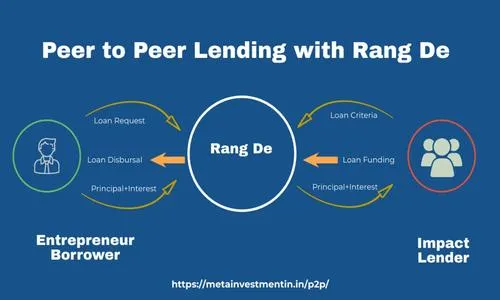
Peer-to-peer (P2P) lending platforms act as facilitators, orchestrating the flow of funds between lenders and borrowers. Here's a breakdown of the typical fund flow and the crucial role the platform plays:
From Lender to Borrower
-
Investor Deposits: The journey starts with lenders depositing their investment funds into the P2P platform. This is typically done through secure online payment gateways linked to the investor's bank account.
-
Platform Escrow Account: The P2P platform holds these deposited funds in a secure escrow account. This account separates investor money from the platform's operational funds, ensuring investor protection.
-
Manual Loan Selection: Investors browse through borrower profiles and loan listings on the platform. They can choose loans based on factors like interest rates, loan terms, borrower creditworthiness, and risk tolerance.
-
Auto Invest: Selecting individual borrowers can be tedious and time-consuming. Fortunately, most P2P platforms offer an automatic investment option. This route distributes your investment funds across multiple borrowers based on your pre-set criteria, saving you valuable time and effort.
-
Loan Funding: Once investors select a loan, they commit their desired investment amount. The platform facilitates the transfer of these funds from the escrow account to a specific loan pool.
From Borrower to Repayment
-
Loan Disbursement: After successful loan funding, the P2P platform disburses the loan amount directly to the borrower's bank account from escrow account.
-
Monthly Payments: Borrowers make fixed monthly payments (principal + interest) throughout the loan term. These payments are collected by the platform in to the escrow account.
-
Distribution to Investors: The P2P platform automatically distributes these borrower repayments to investors in proportion to their investment in the loan. Investors receive their principal amount back in installments, along with the accrued interest.
The Role of the P2P Platform
-
Matching Engine: The platform acts as a matching engine, connecting borrowers seeking funds with lenders seeking investment opportunities.
-
Risk Management: P2P platforms typically employ risk assessment tools to evaluate borrower creditworthiness. This helps mitigate risk for investors. Some platforms might offer features like portfolio diversification tools to further spread risk.
-
Escrow Account Management: Holding investor funds in a secure escrow account safeguards them from misuse by the platform.
-
Transaction Processing: The platform facilitates secure online transactions between lenders and borrowers, ensuring smooth fund flow throughout the loan cycle.
-
Loan Servicing: The platform handles loan servicing tasks like collecting borrower repayments and managing defaults (if any).
-
Investor Communication: Platforms provide investors with regular updates on their investments, including loan performance and repayment schedules.
Potential Benefits of P2P Lending as an Investment
-
High Returns: P2P loans typically offer higher interest rates compared to fixed deposits or savings accounts. This can be attractive for investors seeking better returns.
-
Portfolio Diversification: P2P lending adds a new dimension to your portfolio, potentially reducing overall risk through diversification. Unlike stocks and bonds, P2P returns are not directly tied to market fluctuations.
-
Regular Income: P2P loans allow you to earn interest on a regular basis, providing a steady stream of income. Some platforms offer auto-invest options for hassle-free investing.
Understanding the Risks Involved
-
Credit Risk: A key risk in P2P lending is the possibility of borrowers defaulting on their loans. Investors may lose a portion or even all of their principal amount.
-
Platform Risk: The health and credibility of the P2P platform you choose is crucial. Research the platform's track record, regulatory compliance, and borrower screening processes.
-
Liquidity Risk: P2P investments are typically less liquid than traditional assets like stocks. Exiting your investment before the loan term ends may be difficult and could incur penalties.
Who Can Invest in P2P
- Any Indian citizen (18 years old or above) including NRI
- HUF
- Corporate (Incorporated under Indian Companies Act or RBI Listed Finance Companies)
- Partnership Firm
- Limited Liability Partnership (LLP)
- Body of Individuals
- Society
- Artificial Body
Prominant P2P Platforms
Here is list of the major P2P platforms:
- Faircent (Fairassets Private Ltd)
- Uni P2P (UNI P2P Private Ltd)
- Lenden Club (Innofin Solutions Private Ltd)
- India P2P (Trickle Flood Technologies Pvt Ltd)
- Liquiloans (NDX P2P Private Ltd)
- i2i (i2i Ventures Private Ltd)
- Finzy (Bridge Fintech Solutions Private Ltd)
- Financepeer (Visionary Financepeer Private Ltd)
- Lendbox (Transactree Technologies Private Ltd)
- Rupeecircle (Fintelligence Data Science Private Ltd)
Recently these major P2P came together to form association to proactively adopt high standards of governance, to evolve industry best practices, privacy and data protection norms which is in sync with the laws of the land, set standards to avoid mis-selling, promote ethical business practices, transparency of pricing.
Investing in P2P Lending: What to Consider
-
Choose a Reputable Platform: Do thorough research to select a platform with a strong track record, robust security measures, and transparent processes.
-
Understand Borrower Profiles: Carefully analyze borrower profiles, including creditworthiness and loan purposes. Diversify your investments across multiple borrowers to mitigate risk.
-
Start Small: Begin with a small investment to understand the platform and P2P lending in general before committing larger sums.
Conclusion
P2P lending presents a promising avenue for investors seeking higher returns and portfolio diversification. However, careful consideration of the inherent risks is essential. By understanding the P2P landscape, choosing the right platform, and employing a measured approach, investors can potentially leverage this new asset class for their financial goals.


Mutual fund updates, SIP tips, and what's moving the market. No daily noise — only when there's something worth reading.
Read more about
- Welcome to Meta Investment blogFunds
- Better returns with Bonds
- Exploring Alternative Investment Options in India
- Impact Investing with P2P Lending
- Achieving Milestones: Running and SIP - A Journey of Consistency and Wealth Accumulation
- Fractional Real Estate Investment in India: Unveiling the Risks and Advantages
- Lucrative Investment Opportunities Options for NRIs in India
- PMS in India: A Guide to Portfolio Management Services
- Achieving Financial Success through Goal-Based Investing
- 🌟 Exclusive Ganesh Chaturthi Offer 🌟
- P2P Association Pauses Liquid Funds in India: What You Need to Know
- From Appathon to SIPathon
- Building Your Crorepati Dream
- Unveiling the Secrets of Wealth
- The Cafe vs. The Nest Egg
- Daughters Who Know Dough
- New KYC Norms
- Celebrating Maharashtra Day
- महाराष्ट्र दिवसाच्या हार्दिक शुभेच्छा
- US Federal Reserve continues to hold rates
- Earn More Than Traditional Fixed Income with Market-Linked Debentures
- A Fresh Perspective on Portfolio Management Services (PMS) for NRI/HNI Investors
- This Mother's Day, Give the Gift of Security: Invest for Her Future and Protect Her Health
- Don't Be a Target: Investor Awareness and ARN Verification to avoid Mutual Fund fraud
- Beyond Market Caps: Unveiling Factor Investing with Mutual Funds in India
- Anchoring Your Portfolio: Why Fixed Income Products Deserve a Place in Your Investment Journey
- Anywhere But Home: Investing Lessons from an Ultra-Triathlete
- Riding the Waves: Unveiling Business Cycle Funds in India
- Unveiling the Nifty 50 TRI: A Deeper Look at India's Total Return Champion
- Secure Your Golden Years: A Guide to Corporate NPS for Employees
- The Great Debate: Trading vs. Investing
- Strava and SIPs: How One Cyclist Conquered Both Roads and Finances
- Don't Panic Sell!
- Growing Their Future: Why Mutual Funds Are a Smart Investment for Minors
- Foreign Institutional Investors: A Critical Force in India's Financial Landscape
- Abans Global Arbitrage Fund: A Deep Dive
- Investing in India's Defence Sector
- Sharma Ji Ke Papa
- How To Lose 1 Crore Rupees
- Considering a positive outlook for TCS or Titan? These new MLDs might be for you!
- Yoga of Investing with Bachat Babu
- Exciting News for Meta Investment Clients!
- RBI Floating Rate Savings Bonds: A Flexible Investment Option for Uncertain Times
- One Idiot: A Movie Where the Only Idiot is the One Who Doesn't Watch It (Probably)
- Journey to Financial Independence
- Large and Mid Cap Mutual Funds: The Best of Both Worlds
- 10.10% MUTHOOT FINCORP NCD Open for Subscription
- Retirement Planning for Young Indians
- ₹800 crore Adani NCD Opens for Subscription: Is it the Right Investment for You?
- SIP Saheli: HDFC MF's Masterclass Empowers Women to Take Charge of Their Financial Future
- Bollywood Stars Shine on the 2024 Hurun India Rich List
- 10.75% Sammaan Capital Ltd NCD Open for Subscription
- Long-Short Style Strategy: A Balanced Approach to Investing
- Happy Ganesh Chaturthi!
- 5 Ganesha Mantras for Successful Investing
- 11% Edelweiss Financial Services NCD Opens for Subscription
- Understanding 1st Capital Market Index Fund of India
- Conquer Your 10 Financial Demons This Dussehara
- Motilal Oswal Digital India Fund NFO
- Why Now is a Good Time to Consider Target Maturity Index Funds
- Multi Sector Rotation Fund: A New Player in the Market
- Coming Soon, Mutual Fund Lite
- A New Year, A New Chapter for Your Wealth
- The Ever-Shifting Sands: Why Asset Allocation is Key to Investment Success
- Two Great Fixed-Income Investment Opportunities to Lock in High Returns
- RBI Cuts Repo Rate for the First Time in 5 Years
- Quality Investing Through Mutual Funds in India
- Understanding Risk-On and Risk-Off Environments in the Stock Market
- Forgot Your Mutual Fund Investments? MITRA Can Help You Find Them!
- Samudra Manthan of the Stock Market: Churning Wealth with Shiva’s Grace
- Unlock High Returns with Sammaan Capital Limited’s Secured NCDs – Tranche III Public Issue Now Open!
- 7-Day Plan for Indian Women to Kickstart Their Financial Journey: From Scarcity to Abundance
- From Cricket to Code to Fitness: Investment Lessons from India’s ICC Champions Trophy 2025 Win
- Unlock Financial Wisdom at PIFAA Smart Money Seminar 2025 in PCMC!
- Understanding the Global Economic Policy Uncertainty (GEPU) Index: Implications for Indian Investors
- Nido Home Finance Limited NCD: A Secure Investment Opportunity
- Tata AIA Shubh Flexi Income Plan: A Comprehensive Guide
- How to Invest Like You Train: Discipline, Consistency, and Growth
- Usain Bolt vs. Eliud Kipchoge: What Runners Can Learn About Trading and Investing
- Edelweiss NCDs 2025 – Secure 9.5% to 11% Returns | Best Fixed-Income Investment
- Edelweiss Gold Structured Products: A Smart Way to Invest in Gold with Principal Protection
- Financial Equality: How Dr. Ambedkar’s Vision Aligns with Wealth Creation
- Estate Planning in India: Wills, Trusts & Tax Tips for NRIs & Residents
- Mutual Will: Why Married Couples Must Have One | Estate Planning Guide
- Understanding Beneficial Nominee in Insurance & Its Role in Estate Planning
- NRI Mutual Fund Taxation: How DTAA Can Save You Tax (Anushka Shah Case)
- Gold vs. Mutual Funds vs. Multi-Asset Funds: Best Investment for Akshaya Tritiya 2025
- From Piggy Bank to Portfolio: A Father’s Day Guide to Building Wealth
- HDFC Innovation Fund NFO 2025 – Invest in India’s Growth Story | Returns, Fund Manager & Performance
- Nido Home Finance NCD 2025: Secure 10.75% Returns | CRISIL A+ Rated Investment
- Adani Enterprises NCDs 2025 – Safe Investment with 9.3% Returns?
- Bajaj Finserv Small Cap Fund NFO 2025 – High-Growth Investment Opportunity
- 📈💰 World Emoji Day Special: Smart Investing, SIP & Wealth Growth Made Fun! 🚀💡
- The Importance of Personalized, Transparent Financial Advice in Today’s Digital Age
- RBI’s August 2025 MPC Meeting: Key Highlights & What It Means for You
- From Freedom Fighters to Financial Freedom: Gen Z Investing & Independence Day Lessons
- All Weather Gold: A Principal-Protected Way to Bet on Gold (Until Aug 31)
- ESAF SFB NCD Issue: 11.30% Coupon | Basel II Compliant Bonds
- Begin Your Wealth Journey This Ganesh Chaturthi: Ganpati-Inspired Mutual Fund Lessons
- Tata AIA Health SIP Review 2025: A Smart Health + Investment Plan?
- NPCI Raises UPI Transaction Limits: A Complete Guide to High-Value Payments from Sept 2025
- Tired of Market Volatility? Two New Smart Investment Ideas for 2025
- India’s First Specialized Investment Fund (SIF): Bridge Between MF & PMS | quant Guide
- New GST Changes 2025: Impact on Investors, Sectors, and Mutual Fund Opportunities
- Beyond the Market Rollercoaster: A Guide to the Altiva Hybrid Long-Short SIF | Edelweiss MF
- The Dream and the Nightmare: Honoring Final Wishes Amid Life’s Uncertainties
- RBI Holds Rates Steady: What the October 2025 Policy Means for Your Wallet and Investments
- World Financial Planning Day 2025: Why Urban India Needs Smart Financial Planning
- Diwali Investment 2025: Brighten Your Financial Future with Indel Money Secured NCD | High Yield Fixed Income for Pune Investors
- Light Up Your Finances This Diwali: A Guide to Wealth, Wisdom, and Long-Term Prosperity
- Year-End Review: Mutual Fund Categories & Performance Explained
- Minor Folio in Mutual Funds: Secure Your Child's Financial Future
- Adani Enterprises NCD 2026: 8.9% Yield, Secure Options for Retail Investors | Apply Now
- Step-Up SIP Strategy: Scale Your Mutual Fund Investments in 2026
- PFC NCD Issue Jan 2026: AAA Rated Bonds Offering up to 7.30%
- SEBI Debt Fund Rules 2026: Debt Funds Masterclass - Duration, Credit Risk, Yields Guide
- SEBI's New Voluntary Lock-in for Mutual Fund Folios: What Every Investor Must Know
- SEBI's New Voluntary Lock-in for Mutual Fund Folios: What Every Investor Must Know
- NRI Mutual Fund KYC in 2026: The Ultimate Compliance Handbook
- Step-Up SIP Strategy: Scale Your Mutual Fund Investments in 2026
- Short-Term Goals: Where to Park Your Money in India
- EPF Scheme 2026 Explained: New PF Rules, Withdrawals & NPS Comparison
- US Fed Holds Rates: What It Means for Gold, Silver & the Rupee
- Emergency Fund: The Money That Buys the Right to Say No
- निफ्टी 50 TRI चे अनावरण: भारताच्या एकूण रिटर्न चॅम्पियनवर सखोल नजर
- म्युच्युअल फंड: अल्पवयीन मुलांसाठी स्मार्ट गुंतवणूक का आहे?
- विदेशी संस्थात्मक गुंतवणूकदार: भारताच्या आर्थिक परिदृश्यातील एक गंभीर शक्ती
- महिलांसाठी आर्थिक यशस्वीतेची 7-दिवसीय नियोजन: टंचाईपासून विपुलतेकडे
- निदो होम फायनान्स लिमिटेड एनसीडी: एक सुरक्षित गुंतवणूकीची संधी
- टाटा एआयए शुभ फ्लेक्सी इनकम प्लॅन: एक सविस्तर मार्गदर्शिका
- तुमच्या प्रशिक्षणाप्रमाणे गुंतवणूक कशी करावी: शिस्त, सातत्य आणि वाढ
- उसेन बोल्ट विरुद्ध एलिउड किपचोगे: धावपटू ट्रेडिंग आणि गुंतवणुकीबद्दल काय शिकू शकतात
- एडलवाइस NCD 2025 – 9.5% ते 11% सुरक्षित परतावा | सर्वोत्तम निश्चित उत्पन्न गुंतवणूक
- एडलवाईस गोल्ड स्ट्रक्चर्ड प्रॉडक्ट्स: मुद्दल सुरक्षित ठेवून सोन्यात गुंतवणूक करण्याचा हुशार मार्ग
- आर्थिक समानता: डॉ. आंबेडकरांच्या दृष्टिकोनातून संपत्ती निर्मिती
- भारतात एस्टेट प्लॅनिंग: NRI आणि रहिवाशांसाठी इच्छापत्र, ट्रस्ट आणि कर टिप्स
- म्युच्युअल विलः विवाहित जोडप्यांसाठी का आवश्यक? | एस्टेट प्लॅनिंग मार्गदर्शक
- विमा योजनांमध्ये लाभार्थी नामनिर्देशित व्यक्ती (बेनिफिशियरी नॉमिनी) आणि एस्टेट प्लॅनिंगमधील त्याची भूमिका
- NRI म्युच्युअल फंड कर: DTAA मदतीने कसे कर बचत करू शकता (अनुष्का शहा केस)
- सोने vs म्युच्युअल फंड vs मल्टी-अॅसेट फंड: अक्षय तृतीया २०२५ साठी सर्वोत्तम गुंतवणूक
- 📈💰 वर्ल्ड इमोजी डे स्पेशल: SIP आणि गुंतवणूक मजेशीर पद्धतीने! 🚀💡
Related Posts


This communication is intended solely for general educational and informational purposes. The information provided is general in nature and does not take into account the specific financial goals, risk profile, investment horizon, financial circumstances or other requirements of any particular investor. It should not be construed as personalised investment advice or as a recommendation to buy, sell or hold any specific financial product.
Mutual Fund investments are subject to market risks. Please read all scheme-related documents carefully before investing. Past performance is not indicative of future results and may not be sustained.
The suitability of any mutual fund product, scheme, category or strategy discussed on this page depends on an investor's individual circumstances, including financial goals, risk appetite, investment horizon and liquidity requirements. Investors should independently assess suitability and, where appropriate, seek professional advice before making investment decisions.
Meta Investment is an AMFI-registered Mutual Fund Distributor (ARN-129322) and is not a SEBI-registered Investment Adviser. If investments are made through a mutual fund distributor, the distributor may receive commission from Asset Management Companies in respect of eligible Regular Plan investments. Commission structures may vary across schemes and AMCs. Such commissions should not influence suitability-based recommendations, and applicable conflicts of interest will be disclosed. Please refer to our Commission Disclosure for further details.
Tax treatment of mutual fund investments depends on individual circumstances and prevailing tax laws, which are subject to change. Investors should consult a qualified tax professional for advice specific to their circumstances.
This disclaimer is intended to provide general disclosure and does not replace any scheme-specific disclosures, risk factors, regulatory disclosures or information contained in the applicable Scheme Information Document (SID), Statement of Additional Information (SAI) and Key Information Memorandum (KIM).
Distributor Disclosure: Where this content is provided by a distributor/intermediary, any applicable commission, remuneration, affiliation or other material conflict of interest shall be disclosed separately. The availability of a product through the distributor does not by itself imply that the product is suitable for every investor.
No Guarantee: No statement on this page should be interpreted as a promise, assurance or guarantee of returns or investment outcomes.
Meta Investment – Your Investment and Insurance Companion