

SEBI's New Voluntary Lock-in for Mutual Fund Folios: What Every Investor Must Know
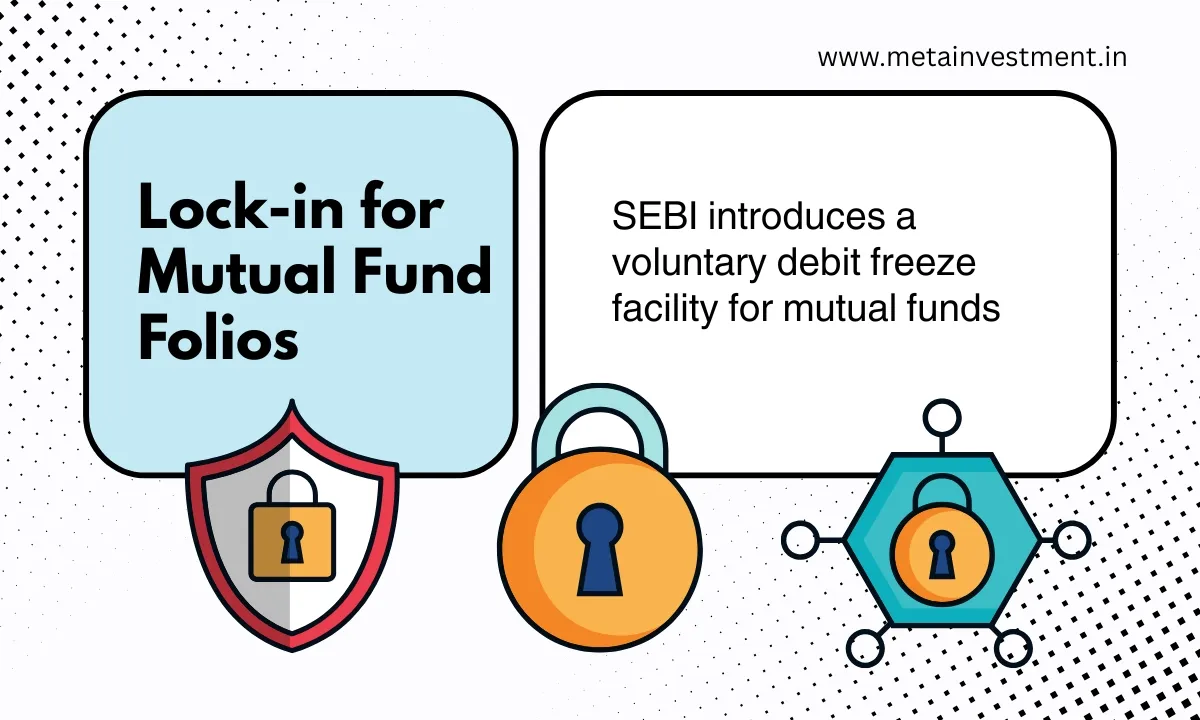
SEBI has taken a significant step to protect mutual fund investors from digital fraud. A new voluntary lock-in (debit freeze) facility for mutual fund folios will go live on April 30, 2026 — and every investor should understand what this means for their portfolio security.
Why SEBI Introduced the Voluntary Debit Freeze
Online fraud is growing at an alarming pace in India. SIM swapping, phishing attacks, and unauthorized access to investment accounts have become real threats — even for cautious investors. While SEBI and AMCs already have multiple layers of security, the regulator recognized that investors needed a self-controlled safety net.
In a circular dated March 6, 2026 (Ref: HO/24/12/12(5)2026-IMD-SEC-1/I/6373/2026), SEBI — in consultation with AMFI — announced the introduction of a voluntary lock-in / debit freeze facility for mutual fund folios. The objective is clear: to promote digital security of units and ensure no units are debited from a folio without the investor's explicit consent.
This is a proactive, investor-empowering move. For the first time, you can put a digital padlock on your investments — on your own terms.
What Exactly is a Mutual Fund Debit Freeze?
A debit freeze (also referred to as voluntary lock-in) means placing a restriction on your mutual fund folio such that no units can be redeemed, switched out, or transferred until you actively choose to remove the freeze.
Think of it like the "block card" feature on your bank's app — except instead of blocking your debit card, you're blocking any outflow from your mutual fund folio. Your investments continue to grow, NAVs are updated, and dividends (if applicable) continue — but no one, including you, can move the units out without first unlocking the folio.
Key Highlights from the SEBI Circular:
- Applicable to: Both demat and non-demat (Statement of Account / SOA) folios
- Platform: MF Central — the inter-operable RTA platform
- Eligibility: KYC-compliant investors with a registered Email ID and Mobile number (both mandatory)
- Effective date: April 30, 2026
- Unlocking process: To be prescribed by AMFI in consultation with SEBI
How to Access the Debit Freeze Facility
In the first phase, the facility will be rolled out through MF Central — the centralized, inter-operable platform launched by SEBI to streamline mutual fund service requests across all RTAs (Registrar and Transfer Agents).
Steps to Activate the Folio Lock (Expected Process):
- Visit MF Central (mfcentral.com) after April 30, 2026
- Log in using your PAN and registered mobile/email OTP
- Select the folio(s) you wish to lock
- Activate the debit freeze — the folio will be locked immediately
- To unlock, follow the process prescribed by AMFI (to be communicated by AMCs and RTAs)
Note: The detailed process, including which transactions are permitted during the lock-in and how to unlock, will be disclosed by all AMCs and RTAs on their websites and in the Statement of Additional Information (SAI). Always check the latest guidelines before proceeding.
Who Should Consider Locking Their Folio?
This feature is especially valuable for investors who:
- Are long-term, passive investors — SIP investors building a corpus over 10–20 years who have no intention of redeeming anytime soon
- Hold large accumulated corpus — HNIs or experienced investors with significant mutual fund holdings who want an extra security layer
- Are concerned about digital fraud — Anyone worried about phishing, SIM swap attacks, or unauthorized access to their investment accounts
- Invest in their child's name (Minor Folio) — Parents managing a minor folio who want to ensure the corpus is untouched until the goal matures
- Senior citizens — Older investors who may be more vulnerable to social engineering or digital fraud
If you're an active trader or someone who switches funds frequently, you'll want to weigh the convenience of unlocking against the security benefit. The freeze is voluntary — you remain in control.
What Happens to Your SIP and Other Transactions During the Freeze?
This is the most common question investors will have: "If my folio is locked, will my monthly SIP still run?"
SEBI has directed AMFI to prescribe a detailed list of financial transactions (redemptions, switches, SWPs) and non-financial transactions (address change, nomination update, etc.) that are either permitted or restricted during the lock-in period. This will be communicated to all AMCs and RTAs.
Until AMFI releases this list, here's what to reasonably expect based on the purpose of the freeze:
| Transaction Type | Likely Status During Freeze |
|---|---|
| New SIP instalments (purchase) | Likely permitted (inflow, not debit of units) |
| Lump sum purchase | Likely permitted |
| Redemption (selling units) | Blocked / restricted |
| Switch-out (moving to another fund) | Likely blocked |
| SWP (Systematic Withdrawal Plan) | Likely blocked or paused |
| Nomination / address update | Process to be defined by AMFI |
Always verify the final permitted transaction list on your AMC or RTA's website once the circular takes effect.
How is This Different from ELSS Lock-in?
A common point of confusion: the ELSS mandatory lock-in and the new voluntary debit freeze are entirely different.
| Feature | ELSS Mandatory Lock-in | Voluntary Debit Freeze |
|---|---|---|
| Nature | Mandatory, regulatory | Optional, investor-initiated |
| Applies to | Only ELSS fund units | Any mutual fund folio |
| Duration | Fixed 3 years per instalment | Until investor chooses to unlock |
| Who controls it | Regulated by SEBI, no choice | Investor decides when to lock/unlock |
| Purpose | Tax saving under Section 80C | Digital fraud protection |
The ELSS lock-in is about tax planning. The debit freeze is about security and peace of mind.
Why This Matters: The Rising Threat of Mutual Fund Fraud
India's mutual fund AUM crossed ₹67 lakh crore in 2024. As more investors — particularly middle-class families and retirees — move their savings into mutual funds, they become attractive targets for fraudsters.
Common threats include:
- Phishing: Fake emails or SMS luring investors to enter credentials on fraudulent websites
- SIM swapping: Fraudsters convincing telecom operators to issue a new SIM with your number, gaining OTP access
- Social engineering: Impersonating AMC or RTA staff to extract account details
- Unauthorized redemptions: Using stolen credentials to redeem units and transfer proceeds
The voluntary debit freeze is a meaningful countermeasure. Even if a fraudster gains access to your account credentials, they cannot redeem your units as long as your folio is locked.
Meta Investment's Recommendation
At Meta Investment, we believe in proactive investor protection. Here's our simple guidance:
- Long-term investors: Strongly consider activating the debit freeze once available on MF Central. The minor inconvenience of unlocking when you need to redeem is far outweighed by the security benefit.
- Review your contact details now: Ensure your registered Email ID and Mobile number are current across all your folios. This is a prerequisite for accessing the debit freeze facility.
- Update your KYC: Only KYC-compliant investors (Registered/Validated) can access this feature. If your KYC is pending or rejected, resolve it before April 30, 2026.
- Minor folio holders: This feature can be an excellent additional safeguard for your child's dedicated investment corpus.
Key Takeaways
- SEBI's voluntary debit freeze allows investors to lock their mutual fund folios, preventing unauthorized redemptions
- Available for both demat and non-demat folios through MF Central from April 30, 2026
- Eligible investors must be KYC-compliant with a valid registered Email ID and Mobile number
- AMFI will prescribe the list of permitted and restricted transactions during the lock-in period
- This is entirely distinct from the mandatory ELSS lock-in — it's investor-controlled and can be activated/deactivated as needed
- Particularly valuable for long-term investors, HNIs, senior citizens, and minor folio holders
Conclusion
SEBI's voluntary lock-in / debit freeze facility is a welcome and timely addition to India's mutual fund ecosystem. In an era of increasing cyber threats, giving investors the power to add a self-controlled security layer to their folios reflects a mature, investor-first regulatory approach.
As a mutual fund investor, the best time to prepare is now — update your KYC, verify your contact details, and be ready to use this feature when it goes live on April 30, 2026. If you need help reviewing your folio details or understanding how this affects your investment plan, reach out to us.
📧 Email: {{ site.data.contact.email }} 📞 Phone/WhatsApp: {{ site.data.contact.whatsapp }} 📍 Address: {{ site.data.contact.office_address }}
💡 Download the Meta Investment App for easy portfolio access and timely updates on regulatory changes like this one. 🔗 Download the App & Stay Informed
Interested in Investing? Connect with Meta Investment
Meta Investment is a financial product distribution and services firm. If you'd like to explore whether a financial product is the right fit for your portfolio, our team will walk you through the details, help you assess suitability, and guide you through the onboarding process.
This article is based on the SEBI Circular HO/24/12/12(5)2026-IMD-SEC-1/I/6373/2026 dated March 06, 2026. Investors are advised to refer to the latest guidelines from SEBI, AMFI, their AMC, and RTA for the most current information before taking any action.
Frequently Asked Questions
What is the SEBI voluntary lock-in (debit freeze) facility for mutual funds?
SEBI has introduced a voluntary debit freeze facility that allows mutual fund investors to lock their folios so that no units can be redeemed or transferred without the investor's explicit consent. Once locked, the folio remains frozen until the investor actively unlocks it. This is designed to protect investors from unauthorized transactions and digital fraud.
From when is the SEBI debit freeze facility available for mutual fund investors?
As per SEBI's circular dated March 6, 2026, the voluntary lock-in / debit freeze facility will come into effect from April 30, 2026.
Where can I activate the lock-in / debit freeze on my mutual fund folio?
In the first phase, the facility will be available through MF Central — the inter-operable RTA platform introduced by SEBI to streamline mutual fund transactions and service requests. You can visit mfcentral.com to access this feature once it goes live.
Who is eligible to use the voluntary debit freeze facility?
The facility is available to all KYC-compliant investors (KYC Registered or Validated) who have a valid registered Email ID and Mobile number linked to their mutual fund folio. Both contact details are mandatory to enable this feature.
Will my SIP continue even if I lock my mutual fund folio?
AMFI is responsible for prescribing the detailed list of transactions — both financial and non-financial — that are permitted during the lock-in period. This information will be available on AMC and RTA websites and in the Statement of Additional Information (SAI). Investors are advised to check these details before activating the freeze.
How do I unlock my mutual fund folio if I want to redeem?
The unlocking process will be prescribed by AMFI in consultation with SEBI and communicated to all AMCs and RTAs. The detailed process for opting in and opting out of the debit freeze will also be disclosed on respective AMC and RTA websites.
Does this lock-in apply to both demat and non-demat mutual fund folios?
Yes. The voluntary debit freeze facility applies to both demat folios and non-demat (Statement of Account-based) folios, providing broad-based security for all types of mutual fund investors.
Why should I voluntarily lock my mutual fund folio?
As digital transactions become more common, the risk of unauthorized access, SIM swapping, phishing, and identity theft has increased. Locking your folio adds an extra layer of protection — preventing any redemption or debit of units until you explicitly choose to unlock it. It's especially useful for long-term investors who do not plan to redeem in the near future.
Is the debit freeze the same as the mandatory lock-in in ELSS funds?
No. The mandatory lock-in in ELSS funds is regulatory — units cannot be redeemed for 3 years from the date of investment. The new voluntary debit freeze is investor-initiated and can apply to any mutual fund folio, regardless of scheme type. The investor chooses to lock and can unlock when needed.


Mutual fund updates, SIP tips, and what's moving the market. No daily noise — only when there's something worth reading.
Read more about
- Achieving Milestones: Running and SIP - A Journey of Consistency and Wealth Accumulation
- Achieving Financial Success through Goal-Based Investing
- Barni's Magic: Rani's Financial Adventure
- ULIP vs Mutual Funds in India
- From Appathon to SIPathon
- Building Your Crorepati Dream
- Unveiling the Secrets of Wealth
- The Cafe vs. The Nest Egg
- Daughters Who Know Dough
- New KYC Norms
- Celebrating Maharashtra Day
- महाराष्ट्र दिवसाच्या हार्दिक शुभेच्छा
- US Federal Reserve continues to hold rates
- Earn More Than Traditional Fixed Income with Market-Linked Debentures
- A Fresh Perspective on Portfolio Management Services (PMS) for NRI/HNI Investors
- This Mother's Day, Give the Gift of Security: Invest for Her Future and Protect Her Health
- Don't Be a Target: Investor Awareness and ARN Verification to avoid Mutual Fund fraud
- Beyond Market Caps: Unveiling Factor Investing with Mutual Funds in India
- Anchoring Your Portfolio: Why Fixed Income Products Deserve a Place in Your Investment Journey
- Brewing a Better Future: How Chai Can Teach You About Smart Investments
- Anywhere But Home: Investing Lessons from an Ultra-Triathlete
- Riding the Waves: Unveiling Business Cycle Funds in India
- Unveiling the Nifty 50 TRI: A Deeper Look at India's Total Return Champion
- Secure Your Golden Years: A Guide to Corporate NPS for Employees
- Peer-to-Peer Lending: A New Era for Indian Investors?
- The Great Debate: Trading vs. Investing
- Strava and SIPs: How One Cyclist Conquered Both Roads and Finances
- Don't Panic Sell!
- Growing Their Future: Why Mutual Funds Are a Smart Investment for Minors
- Foreign Institutional Investors: A Critical Force in India's Financial Landscape
- Abans Global Arbitrage Fund: A Deep Dive
- Investing in India's Defence Sector
- Sharma Ji Ke Papa
- How To Lose 1 Crore Rupees
- Considering a positive outlook for TCS or Titan? These new MLDs might be for you!
- Yoga of Investing with Bachat Babu
- Exciting News for Meta Investment Clients!
- RBI Floating Rate Savings Bonds: A Flexible Investment Option for Uncertain Times
- One Idiot: A Movie Where the Only Idiot is the One Who Doesn't Watch It (Probably)
- Journey to Financial Independence
- Large and Mid Cap Mutual Funds: The Best of Both Worlds
- Retirement Planning for Young Indians
- ₹800 crore Adani NCD Opens for Subscription: Is it the Right Investment for You?
- SIP Saheli: HDFC MF's Masterclass Empowers Women to Take Charge of Their Financial Future
- Bollywood Stars Shine on the 2024 Hurun India Rich List
- Long-Short Style Strategy: A Balanced Approach to Investing
- Happy Ganesh Chaturthi!
- 5 Ganesha Mantras for Successful Investing
- Building Blocks of Wealth: A Guide to Investing for Kids
- 11% Edelweiss Financial Services NCD Opens for Subscription
- Understanding 1st Capital Market Index Fund of India
- Conquer Your 10 Financial Demons This Dussehara
- Motilal Oswal Digital India Fund NFO
- Why Now is a Good Time to Consider Target Maturity Index Funds
- Multi Sector Rotation Fund: A New Player in the Market
- Coming Soon, Mutual Fund Lite
- A New Year, A New Chapter for Your Wealth
- The Ever-Shifting Sands: Why Asset Allocation is Key to Investment Success
- Quality Investing Through Mutual Funds in India
- Understanding Risk-On and Risk-Off Environments in the Stock Market
- Forgot Your Mutual Fund Investments? MITRA Can Help You Find Them!
- Samudra Manthan of the Stock Market: Churning Wealth with Shiva’s Grace
- 7-Day Plan for Indian Women to Kickstart Their Financial Journey: From Scarcity to Abundance
- From Cricket to Code to Fitness: Investment Lessons from India’s ICC Champions Trophy 2025 Win
- Unlock Financial Wisdom at PIFAA Smart Money Seminar 2025 in PCMC!
- Understanding the Global Economic Policy Uncertainty (GEPU) Index: Implications for Indian Investors
- Nido Home Finance Limited NCD: A Secure Investment Opportunity
- Tata AIA Shubh Flexi Income Plan: A Comprehensive Guide
- How to Invest Like You Train: Discipline, Consistency, and Growth
- Usain Bolt vs. Eliud Kipchoge: What Runners Can Learn About Trading and Investing
- Financial Equality: How Dr. Ambedkar’s Vision Aligns with Wealth Creation
- Estate Planning in India: Wills, Trusts & Tax Tips for NRIs & Residents
- Mutual Will: Why Married Couples Must Have One | Estate Planning Guide
- Understanding Beneficial Nominee in Insurance & Its Role in Estate Planning
- NRI Mutual Fund Taxation: How DTAA Can Save You Tax (Anushka Shah Case)
- Gold vs. Mutual Funds vs. Multi-Asset Funds: Best Investment for Akshaya Tritiya 2025
- From Piggy Bank to Portfolio: A Father’s Day Guide to Building Wealth
- HDFC Innovation Fund NFO 2025 – Invest in India’s Growth Story | Returns, Fund Manager & Performance
- Nido Home Finance NCD 2025: Secure 10.75% Returns | CRISIL A+ Rated Investment
- Bajaj Finserv Small Cap Fund NFO 2025 – High-Growth Investment Opportunity
- 📈💰 World Emoji Day Special: Smart Investing, SIP & Wealth Growth Made Fun! 🚀💡
- The Importance of Personalized, Transparent Financial Advice in Today’s Digital Age
- RBI’s August 2025 MPC Meeting: Key Highlights & What It Means for You
- From Freedom Fighters to Financial Freedom: Gen Z Investing & Independence Day Lessons
- All Weather Gold: A Principal-Protected Way to Bet on Gold (Until Aug 31)
- ESAF SFB NCD Issue: 11.30% Coupon | Basel II Compliant Bonds
- Begin Your Wealth Journey This Ganesh Chaturthi: Ganpati-Inspired Mutual Fund Lessons
- Tata AIA Health SIP Review 2025: A Smart Health + Investment Plan?
- NPCI Raises UPI Transaction Limits: A Complete Guide to High-Value Payments from Sept 2025
- Tired of Market Volatility? Two New Smart Investment Ideas for 2025
- India’s First Specialized Investment Fund (SIF): Bridge Between MF & PMS | quant Guide
- New GST Changes 2025: Impact on Investors, Sectors, and Mutual Fund Opportunities
- Beyond the Market Rollercoaster: A Guide to the Altiva Hybrid Long-Short SIF | Edelweiss MF
- The Dream and the Nightmare: Honoring Final Wishes Amid Life’s Uncertainties
- RBI Holds Rates Steady: What the October 2025 Policy Means for Your Wallet and Investments
- World Financial Planning Day 2025: Why Urban India Needs Smart Financial Planning
- Diwali Investment 2025: Brighten Your Financial Future with Indel Money Secured NCD | High Yield Fixed Income for Pune Investors
- Light Up Your Finances This Diwali: A Guide to Wealth, Wisdom, and Long-Term Prosperity
- World Savings Day: Why Saving Smarter is Your Superpower for 2025
- Year-End Review: Mutual Fund Categories & Performance Explained
- Minor Folio in Mutual Funds: Secure Your Child's Financial Future
- Step-Up SIP Strategy: Scale Your Mutual Fund Investments in 2026
- DynaSIF Equity Long-Short Fund NFO: Strategy, Benefits & Details
- SEBI's New Voluntary Lock-in for Mutual Fund Folios: What Every Investor Must Know
- Rupee Depreciation and the Rising Cost of Your Child's Dream Abroad
- Form 121: The New TDS Declaration That Replaces Form 15G & 15H
- RBI MPC April 2026: Repo Rate Held, What It Means for Your Investments
- NRI Mutual Fund KYC in 2026: The Ultimate Compliance Handbook
- NPS Retirement Income Schemes (RIS) & Drawdown Options Explained
- Electronic Gold Receipts (EGR): NSE's New Way to Own Gold Digitally
- Step-Up SIP Strategy: Scale Your Mutual Fund Investments in 2026
- RBI's New Conduct Rules for Banks: What Investors Must Know
- EPF Scheme 2026 Explained: New PF Rules, Withdrawals & NPS Comparison
- Senior Citizen Savings Scheme: New Rules from 1 July 2026
- Tata AIA Sampoorna Care – Cancer & Cancer Fund Explained
- FCNR Deposits Explained: A Dollar FD Guide for NRIs
- SEBI Extends SWP/STP Facility to Demat Mutual Fund Units
- SEBI Simplifies Mutual Fund Transmission: What Changes for Nominees and Legal Heirs
- Cross-Border Motor Insurance: What the Supreme Court's 2026 Ruling Means
- US Fed Holds Rates: What It Means for Gold, Silver & the Rupee
- Closing Auction Session: Why Arbitrage Fund NAVs Jumped
- निफ्टी 50 TRI चे अनावरण: भारताच्या एकूण रिटर्न चॅम्पियनवर सखोल नजर
- म्युच्युअल फंड: अल्पवयीन मुलांसाठी स्मार्ट गुंतवणूक का आहे?
- विदेशी संस्थात्मक गुंतवणूकदार: भारताच्या आर्थिक परिदृश्यातील एक गंभीर शक्ती
- महिलांसाठी आर्थिक यशस्वीतेची 7-दिवसीय नियोजन: टंचाईपासून विपुलतेकडे
- निदो होम फायनान्स लिमिटेड एनसीडी: एक सुरक्षित गुंतवणूकीची संधी
- टाटा एआयए शुभ फ्लेक्सी इनकम प्लॅन: एक सविस्तर मार्गदर्शिका
- तुमच्या प्रशिक्षणाप्रमाणे गुंतवणूक कशी करावी: शिस्त, सातत्य आणि वाढ
- उसेन बोल्ट विरुद्ध एलिउड किपचोगे: धावपटू ट्रेडिंग आणि गुंतवणुकीबद्दल काय शिकू शकतात
- आर्थिक समानता: डॉ. आंबेडकरांच्या दृष्टिकोनातून संपत्ती निर्मिती
- भारतात एस्टेट प्लॅनिंग: NRI आणि रहिवाशांसाठी इच्छापत्र, ट्रस्ट आणि कर टिप्स
- म्युच्युअल विलः विवाहित जोडप्यांसाठी का आवश्यक? | एस्टेट प्लॅनिंग मार्गदर्शक
- विमा योजनांमध्ये लाभार्थी नामनिर्देशित व्यक्ती (बेनिफिशियरी नॉमिनी) आणि एस्टेट प्लॅनिंगमधील त्याची भूमिका
- NRI म्युच्युअल फंड कर: DTAA मदतीने कसे कर बचत करू शकता (अनुष्का शहा केस)
- सोने vs म्युच्युअल फंड vs मल्टी-अॅसेट फंड: अक्षय तृतीया २०२५ साठी सर्वोत्तम गुंतवणूक
- 📈💰 वर्ल्ड इमोजी डे स्पेशल: SIP आणि गुंतवणूक मजेशीर पद्धतीने! 🚀💡
- RBI चे बँकांसाठी नवे वर्तन नियम: गुंतवणूकदारांनी काय जाणून घ्यावे


This communication is intended solely for general educational and informational purposes. The information provided is general in nature and does not take into account the specific financial goals, risk profile, investment horizon, financial circumstances or other requirements of any particular investor. It should not be construed as personalised investment advice or as a recommendation to buy, sell or hold any specific financial product.
Mutual Fund investments are subject to market risks. Please read all scheme-related documents carefully before investing. Past performance is not indicative of future results and may not be sustained.
The suitability of any mutual fund product, scheme, category or strategy discussed on this page depends on an investor's individual circumstances, including financial goals, risk appetite, investment horizon and liquidity requirements. Investors should independently assess suitability and, where appropriate, seek professional advice before making investment decisions.
Meta Investment is an AMFI-registered Mutual Fund Distributor (ARN-129322) and is not a SEBI-registered Investment Adviser. If investments are made through a mutual fund distributor, the distributor may receive commission from Asset Management Companies in respect of eligible Regular Plan investments. Commission structures may vary across schemes and AMCs. Such commissions should not influence suitability-based recommendations, and applicable conflicts of interest will be disclosed. Please refer to our Commission Disclosure for further details.
Tax treatment of mutual fund investments depends on individual circumstances and prevailing tax laws, which are subject to change. Investors should consult a qualified tax professional for advice specific to their circumstances.
This disclaimer is intended to provide general disclosure and does not replace any scheme-specific disclosures, risk factors, regulatory disclosures or information contained in the applicable Scheme Information Document (SID), Statement of Additional Information (SAI) and Key Information Memorandum (KIM).
Distributor Disclosure: Where this content is provided by a distributor/intermediary, any applicable commission, remuneration, affiliation or other material conflict of interest shall be disclosed separately. The availability of a product through the distributor does not by itself imply that the product is suitable for every investor.
No Guarantee: No statement on this page should be interpreted as a promise, assurance or guarantee of returns or investment outcomes.
Meta Investment – Your Investment and Insurance Companion